Shinrin Yoku The Science Of Forest Bathing
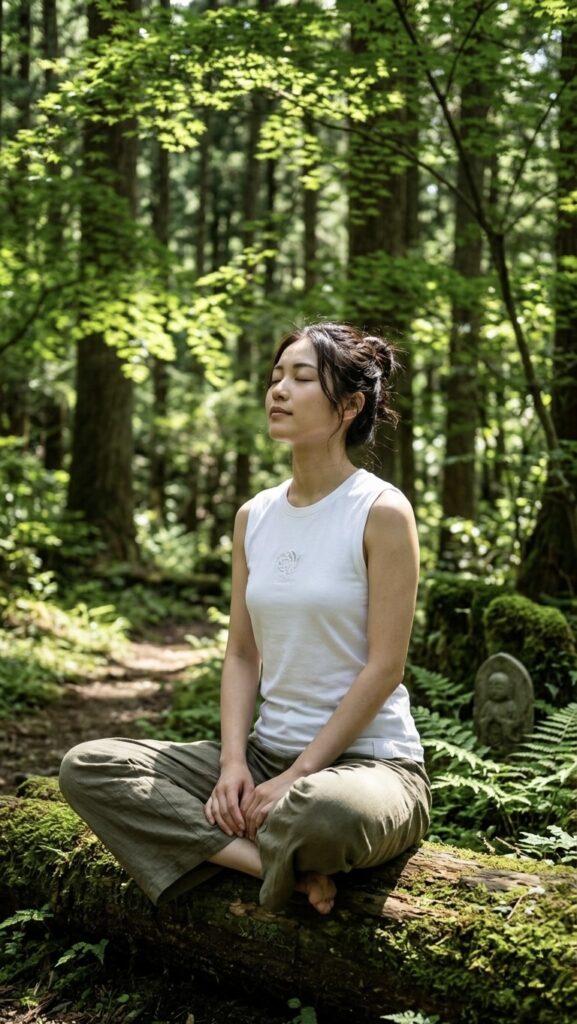
In 1982, Japan’s Ministry of Agriculture, Forestry and Fisheries coined a term: shinrin-yoku — forest bathing. It was not an invitation to swim in a lake. It was a public health recommendation: that the Japanese population, increasingly urbanised and increasingly unwell in the particular ways that desk-bound city life produces, should spend time walking slowly through trees.
Forty years later, the science behind that recommendation has become one of the most replicated bodies of research in preventive medicine. And “slowly” remains the operative word.
What the Research Shows
The first rigorous studies were conducted by Dr Qing Li at the Nippon Medical School in Tokyo in the early 2000s. Li took groups of subjects into the forests of Akasawa — a 340-hectare natural recreation forest in Nagano Prefecture, designated Japan’s first official forest therapy base in 2006 — and measured their physiology before and after exposure.
The results were consistent and large. After two hours of slow walking in a forested area with sufficient tree cover and biodiversity, subjects showed a 12.4% decrease in cortisol levels, a 7% decrease in sympathetic nerve activity, a 5.8% decrease in heart rate, and a measurable increase in natural killer (NK) cell activity — the immune cells responsible for identifying and destroying tumour cells and virus-infected cells.
The NK cell effect was particularly striking. In a 2008 study, Li found that a three-day forest walk increased NK cell activity by 50%, and that this increase persisted for 30 days after the visit. A single day trip produced a 40% increase lasting seven days.
The mechanism appears to involve phytoncides — airborne chemical compounds released by trees, particularly conifers, as a natural defence against insects and pathogens. Humans inhale these compounds in forested environments; the immune system responds by upregulating its natural killer cell production. The forest, in effect, shares its immune response with those who walk through it.
Japan’s Forest Network
Japan is approximately 67% forested — one of the highest proportions in the world for a country of its size and population density. In response to the growing evidence base, the Japanese government has formally designated 62 Forest Therapy bases across the country — sites that have been scientifically evaluated for their therapeutic potential and equipped with certified Forest Therapy guides.
Akasawa Natural Recreation Forest, Nagano. Japan’s first and most studied forest therapy base. The forest contains 300-year-old hinoki cypress, and the trails are graded by gradient and duration.
Yakushima Island, Kagoshima. A UNESCO World Heritage site containing yakusugi cedars estimated at 2,000–7,200 years old. The oldest living tree in Japan, Jomonsugi, is a seven-hour round-trip hike from the trailhead. The forest produces a concentration of phytoncides that researchers describe as exceptional.
Okutama, Tokyo. For those in the capital, the forests of Okutama are 90 minutes by train from Shinjuku. Several Forest Therapy trails have been designated within commuting distance of the world’s largest city.
How to Do It Properly
Shinrin-yoku is not a hike. The distinction matters.
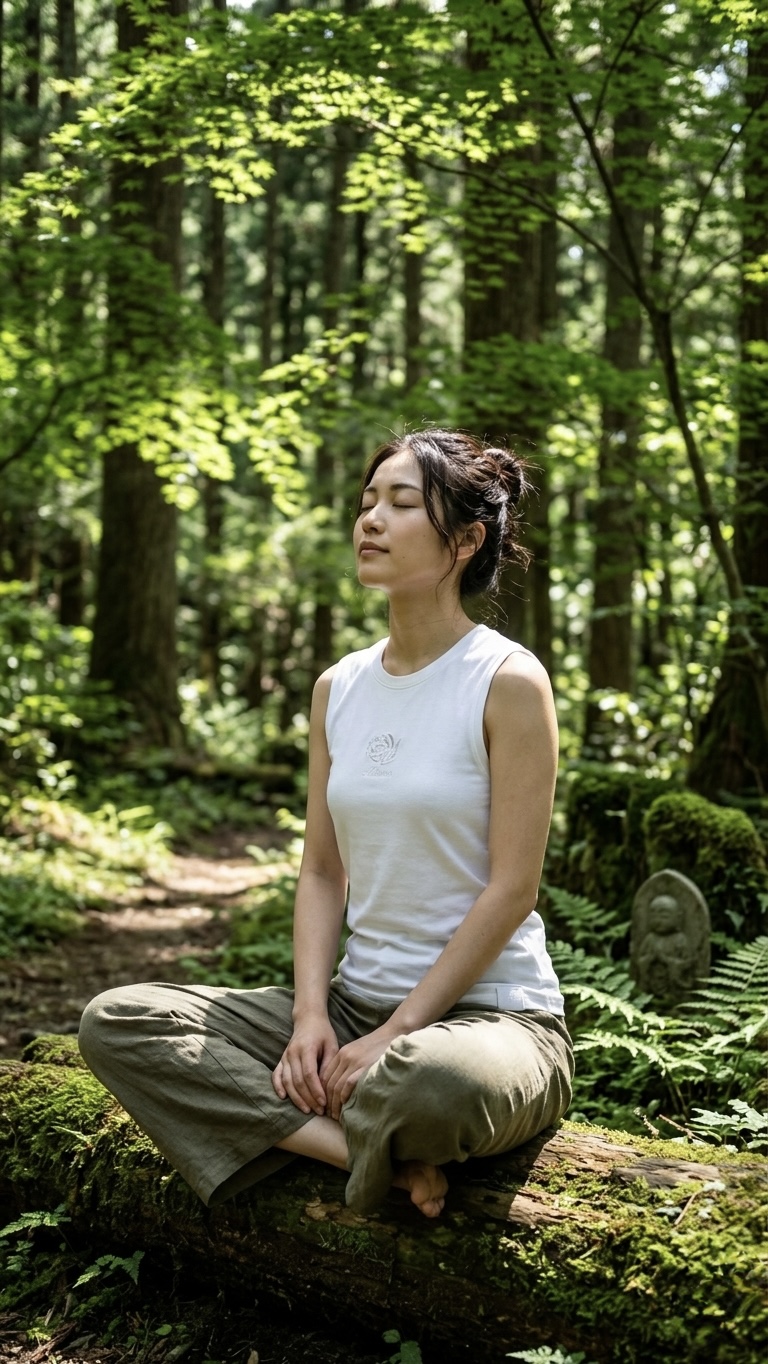
A hike has a destination. Shinrin-yoku does not. The goal is to be in the forest, not to traverse it. The recommended pace is approximately 1.5 kilometres per hour — half walking speed. Phones are ideally turned off. The practice involves deliberately slowing sensory attention: noticing the way light passes through a canopy, the temperature differential between open ground and the shadow of a tree, the sound of water before you can see it.
Researchers believe much of the benefit comes from the physiological effect of simply not being alert. In urban environments, the human nervous system runs a low-level threat assessment continuously — traffic, social signals, noise. In a forest with sufficient cover and depth, this assessment relaxes. The result is a parasympathetic state that most people rarely access during waking hours.
Dr Li recommends a minimum of two hours in a single session for measurable immune effects. Regular practice — once or twice per month — appears to maintain the NK cell elevation over time.
The Luxury Dimension
The most expensive ryokan in Japan are almost universally forest-adjacent. This is not coincidence. Hoshi Onsen Chojukan in Gunma, Nakamuraya Ryokan in Nikko, and the Hoshinoya properties throughout the Japanese Alps are all built to place guests in direct relationship with old-growth forest — the forest visible from the bath, audible from the room, accessible on foot within minutes of arrival.
These properties offer guided forest walks as a matter of course, typically at dawn, before guests have eaten. The metabolic state produced by an empty stomach and cool forest air first thing in the morning is, practitioners say, notably more intense than afternoon walks.
For those building a serious wellness practice into their travel, Japan offers something unique: a country where the most beautiful natural environments are not merely adjacent to luxury accommodation — they are considered part of it.
The forests of Japan are the backdrop to some of the world’s most extraordinary stays. ADAMAS’s travel guides cover the ryokan and wellness properties that understand this best. Explore at adamas-gold.jp