Quiet Luxury Was Born In Japan
There is a moment, familiar to anyone who has spent time in Kyoto, when the noise of wanting things stops.
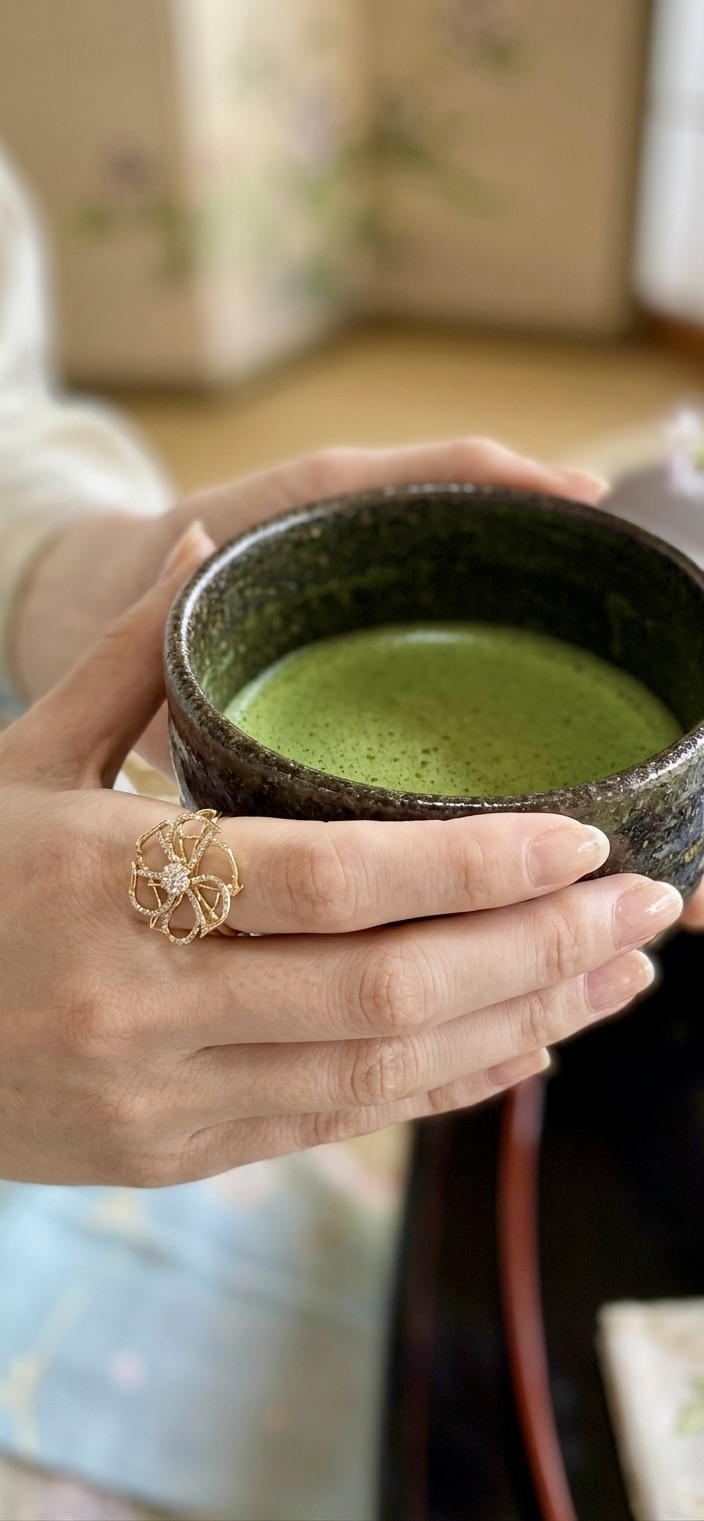
You are standing in a machiya townhouse. The walls are unadorned. The floor is worn smooth by two hundred years of feet. On a low shelf, a single ceramic bowl — irregular, unhurried, unmistakably beautiful. Nothing announces itself. Nothing needs to.
This is not minimalism. Minimalism is a design choice. What you are experiencing is older and stranger: a philosophy that holds that restraint is the highest form of expression, that the unfinished edge reveals more than the polished surface, and that the most powerful luxury of all is the kind that only the educated eye can see.
The Western world has recently decided to call this “quiet luxury.” In Japan, it has simply always been the way things are done.
Wabi-sabi: The Aesthetic the West Forgot to Translate
The concept of wabi-sabi is routinely described as “the beauty of imperfection,” which is technically accurate and spiritually useless. The fuller meaning is closer to this: that all things are incomplete, impermanent, and imperfect — and that recognising this, rather than fighting it, is the beginning of true taste.
In practical terms, it means a lacquerware bowl repaired with gold (kintsugi), rather than discarded. A tea garden where the moss is allowed to spread unevenly. A kimono whose dye has faded in one particular way and not another, making it, paradoxically, more valuable than when it was new.
It is the antithesis of what the luxury industry spent the twentieth century selling: newness, brightness, legibility, the logo. Wabi-sabi asks that you earn the knowledge to appreciate what you are looking at. It is luxury that keeps its secrets.
Why the Richest People in the World Are Paying Attention
The shift that began around 2022 — when luxury consumers in London, New York, and Shanghai began openly turning away from logomania — did not come from nowhere.
It came from exhaustion. The constant visibility of luxury goods on social media had made them ordinary. The exclusivity that once made a monogrammed bag desirable had been dissolved by ubiquity. Wealthy consumers began asking a different question: what do people with real taste actually own?
The answer, increasingly, was things made by Japanese craftspeople.
Demand for traditional Japanese crafts — urushi lacquerware, Hizen Yamaguchi porcelain, hand-blown Otaru glass — has risen consistently every year since 2020. At international design fairs, Japanese artisans who were previously unknown outside specialist circles are now the people that curators queue to meet. The high-end ryokan sector, which offers austere, expensive simplicity rather than the Dubai model of gold and abundance, is booked out twelve months in advance by guests from Europe and the United States.
Japan did not change. The world caught up.
The Three Principles That Define It
Mono no aware — the pathos of things. The Japanese phrase for the bittersweetness of beautiful things passing. Cherry blossoms matter because they fall. This is why Japanese luxury objects are not made to last forever in the Western sense — they are made to age beautifully, to carry time visibly, to become more themselves as years pass.
Ma — negative space as substance. In Japanese aesthetics, the empty space in a composition is not the absence of something — it is an active element. The pause in a tea ceremony. The unplanted corner of a garden. The uncarved surface of a netsuke. Ma is what allows the meaningful parts to be meaningful. It is the opposite of the maximalist instinct to fill every surface and every moment.
Katachi — form following material. Where Western craftsmanship often forces materials into predetermined forms, Japanese craft tends to follow what the material naturally wants to become. The grain of the wood. The way the glaze pools in a kiln. The slight asymmetry that a human hand, not a machine, produces. This is why Japanese objects feel different in the hand: they have not been corrected into perfection.
What This Means for How You Buy
If you are reading this with the intention of building a life that reflects these values — and not merely decorating it with their symbols — the principle is straightforward: buy less, and buy better.
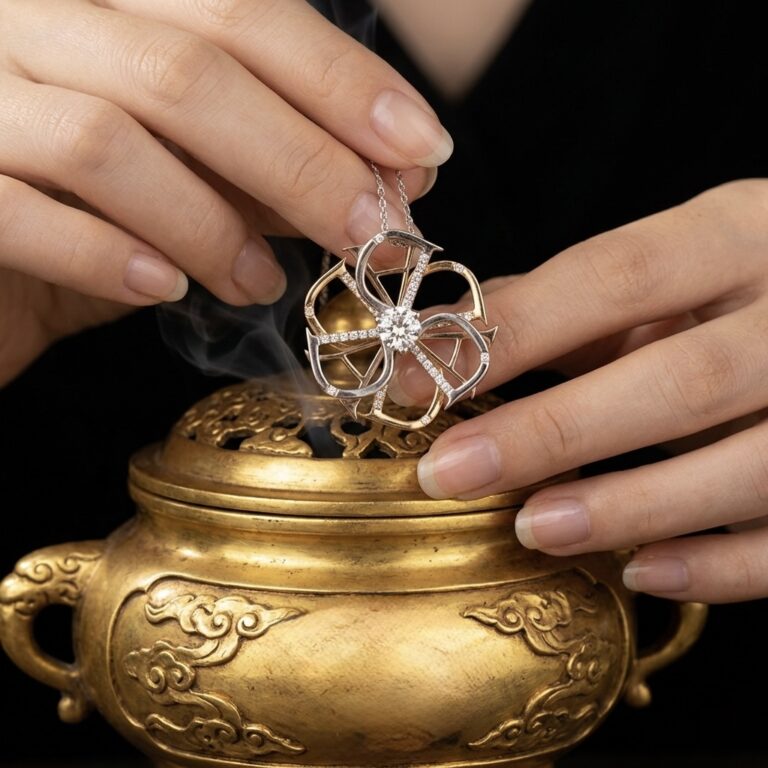
One hand-thrown chawan from a Kyoto ceramicist, used every morning, is a different kind of possession from a cabinet full of objects that announce their price. One piece of jewellery made by a craftsperson who knows your name is a different kind of possession from ten pieces that share a logo.
Japan has always known this. It built an entire civilisation on the idea.
The rest of the world is just beginning to catch up.
Explore ADAMAS’s collection of jewellery made by Japanese artisans — pieces designed to be worn for decades, not seasons. Shop at adamas-gold.jp