Omamori Japanese Amulets Guide
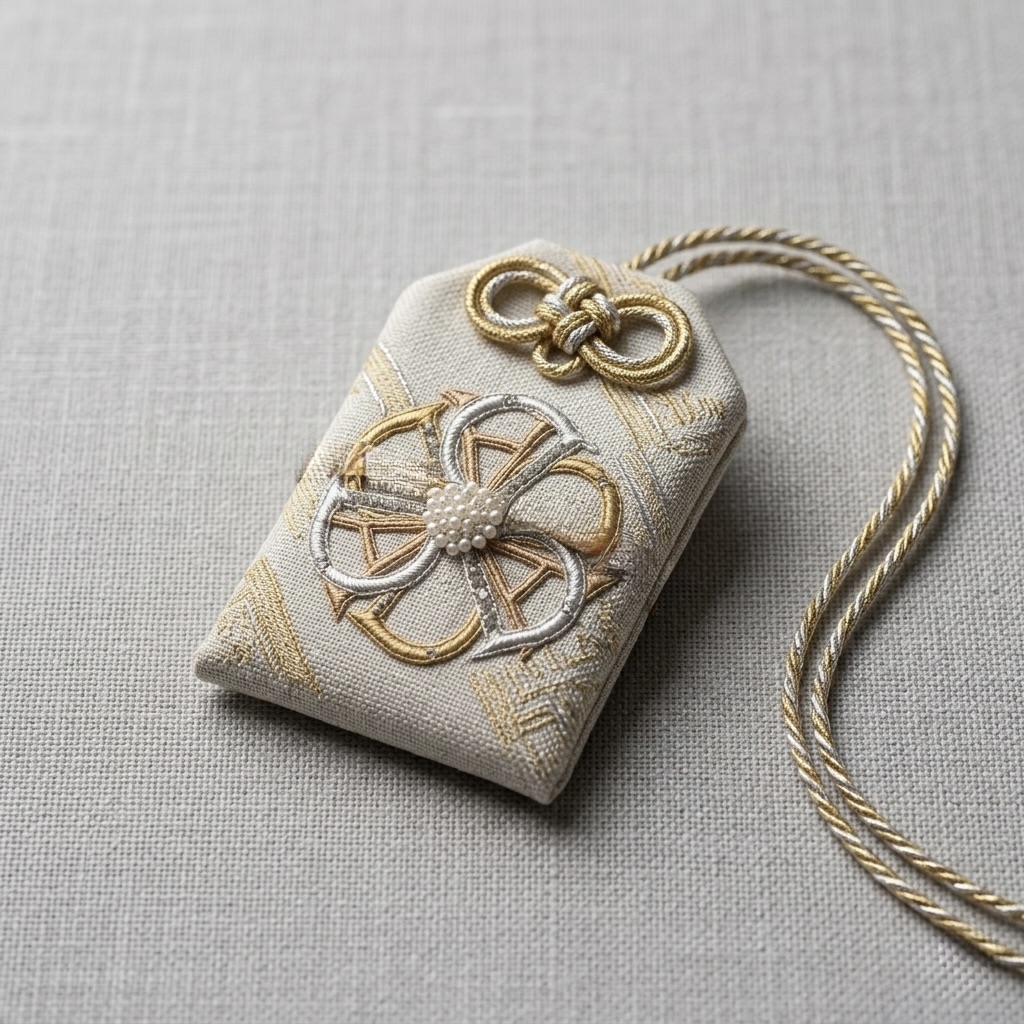
They are sold at every major shrine and temple in Japan, in glass cases lined up like merchandise, which they are. They come in silk brocade pouches in colours that correspond to their purpose — red for love, white for health, yellow for academic success. They cost between 500 and 1,500 yen. They are carried by a proportion of the Japanese population that would surprise most foreign observers.
Omamori — protective amulets — are one of the most persistent and widespread spiritual practices in contemporary Japan. A country that is, by most survey measures, among the least conventionally religious in the world, nevertheless maintains a billion-yen industry in small cloth charms that people tuck into wallets, hang from handbags, fix to dashboards, and attach to the straps of school bags.
Understanding why requires a small adjustment in how you think about Japanese spirituality.
Not Religion: Practice
Most Japanese people, asked whether they believe in the Shinto or Buddhist cosmology, will say something like: not exactly, not in a literal sense. Asked whether they visit shrines at New Year, carry omamori, or seek blessings for new cars and new homes, the same people will say: of course, yes, always.
The apparent contradiction resolves if you understand that omamori are not primarily about belief. They are about a particular quality of attention to the uncontrollable. Carrying an omamori is an acknowledgement that some things — health, love, the outcome of an examination — are not entirely within your power. The amulet does not fix this problem. It marks it. It is a form of carried prayer: a small physical object that maintains, at the level of the body, a connection to a request you once made.
The Range of Protection
Omamori are precisely categorised. Unlike the generalised “good luck” charms of other cultures, each type addresses a specific concern.
Kaiun (開運) — General fortune improvement. The most common type, sold at virtually every shrine. Appropriate for situations of uncertain outcome.
En-musubi (縁結び) — Relationship binding. From the phrase for “connecting threads of fate.” Sold at shrines associated with the god of relationships, particularly Izumo Taisha in Shimane. Extremely popular.
Gakugyō-jōju (学業成就) — Academic success. Sold in enormous quantities before university entrance examination season. The shrine Kitano Tenmangu in Kyoto, dedicated to the scholar-god Sugawara no Michizane, sells tens of thousands annually.
Kōtsū-anzen (交通安全) — Traffic safety. One of the most visible categories — frequently seen attached to rear-view mirrors or dashboard fixtures.
Anzan (安産) — Safe delivery in childbirth. One of the few omamori types that are traditionally replaced and returned to the shrine after the purpose is fulfilled.
The Rules (and When to Break Them)
The amulet should not be opened. The protective power (go-riyaku) resides in the sacred object placed inside during the shrine’s consecration ritual. Opening the pouch dissipates the power. This guidance is followed by almost everyone.
Omamori have a one-year lifespan. The conventional wisdom is that protective charms should be returned to the shrine where they were purchased after one year, burned in a ceremonial fire (otaki-age), and replaced. Most major shrines hold disposal ceremonies in January.
They should not be passed on second-hand. An omamori returned by one person to be passed to another is considered to carry the original owner’s karma forward. Gifting a new omamori directly, however, is a common and warmly regarded practice.
Where to Find the Notable Ones
Izumo Taisha, Shimane. The en-musubi amulets from Japan’s most important relationship shrine have become collector objects for people who never enter a shrine in ordinary life. Red silk, white cord, the shrine’s formal seal.
Meiji Jingu, Tokyo. The general fortune omamori here has an understated quality — dark blue brocade, restrained design — that places it apart from the brighter tourist-facing versions sold at high-volume shrines.
Dazaifu Tenmangu, Fukuoka. The academic success omamori here are considered among the most powerful in western Japan, at the shrine built on the grave of Japan’s patron of scholarship. Students travel from across Kyushu.
Sensoji, Tokyo. Asakusa’s most famous temple produces omamori in an unusually wide range of categories and designs. For first-time visitors, the variety is instructive.
On Keeping Them
There is a category of people — not religious, not particularly traditional, usually quite internationally-minded — who keep omamori with a particular seriousness. They know exactly where each one was purchased and what it is for. The one in the wallet is from Izumo Taisha, given by a friend the month before a relationship began. The one in the bag is from Dazaifu, from the morning before a career-defining interview.
These are not people who believe the amulets caused anything. They are people for whom the objects serve as a physical record of moments when they asked for something, and were aware of asking. The category of experience this produces — specific, embodied, chronological — is not obviously inferior to any other spiritual practice, and arguably more honest than most.
Japan’s material culture produces some of the world’s most considered objects — whether shrine-consecrated or handcrafted. Explore the ADAMAS collection at adamas-gold.jp